



We started our trip east by first going to San Diego. This coastal city is long known for its great weather, and this visit was no exception. It was sunny, blue skies, high 70s and low 80s.
However, it was not for the weather that we went to San Diego. It was to visit James’ aunt, the youngest of his mom’s siblings, who now enjoys 90 years of age. Although a bit frail, she is as witty, sharp, and interesting as she has ever been. I’ll bet the reader knows a relative like this and feel as priviledged that he does. She is the only one that can use the diminutive form of James, calling him Jimmy — and what can he say except "Yes Mam," and "No Mam," feeling a trilfe uncomfortable.
It feels great if not uncomfortable that this retired man is still a child in his aunt’s eyes.
Aunt Frances’ husband goes to Tijuana, Mexico frequently, as it is only a short drive south, but since James has been there a number of times, we decided to pass.
After a nice, interesting and rewarding visit with James’ Aunt in San Diego, we decided to go to the San Diego Zoo. The zoo, is of course, world renowned. Even if you have visited other zoos, this one is a must if you are in southern California.
It was a beautiful, warm, Friday, but no crowds and with an affordable entry fee, it made a nice addition to our trip. On the advice of a gentleman guide, we took a double-decker tour bus (included in the price) for the first 45 minutes. This orients visitors with the park, and gives you ideas of what areas you might want to visit. Once we returned to our starting point, James wanted to take the aerial Skyfari gondola ride to the "Polar Plunge" on the other side of the park.
Off we went, high above the lush vegetation and animals. Arriving on the other side of the zoo, we started to walk back, checking out the exhibits as we went. The first animals we visited were the polar bears. They were swimming in their pool, and their impressive size made us happy that they were happy on their side of the enclosure!
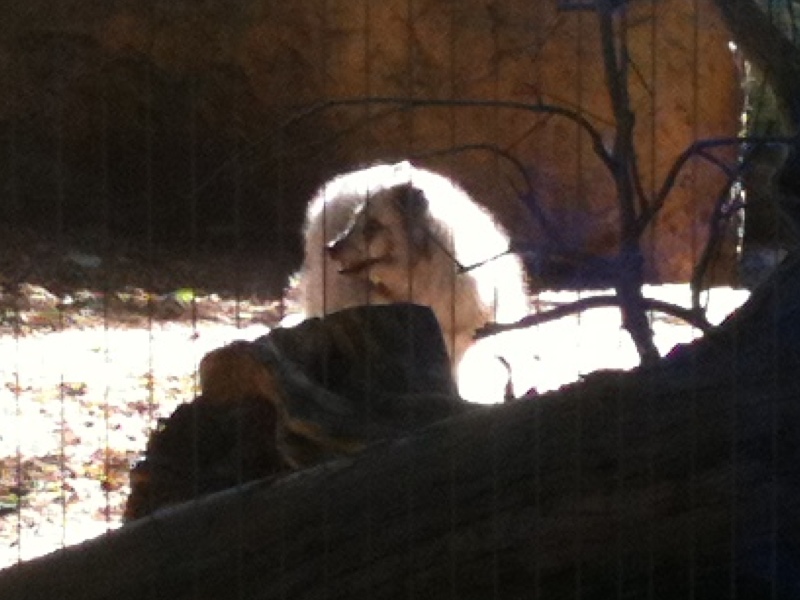
The other animals in this section were elk and and a cute, very fat Arctic Fox!
As we proceeded through the zoo, we could see how well the animals were taken care of. The enclosures and pens were scrupulously clean, and the animals appeared to be content. The habitats were natural to where they live in the wild, with vegetation that even in winter is beautiful.
We followed trails that led through jungle terrain, along the Monkey Trail, to the Gorilla Tropics and Absolutely Apes. Here we met an orangutan that wanted nothing but to socialize. He left his mates swinging on ropes and in the trees, and came to the 110 foot long viewing window to stare out at us, as we humans stared back at him. I got the feeling that if he could, he would climb into a lap to be rocked like a baby.
James wanted another ride on the Skyfari, so up we went again, sailing smoothly across the park. We went to the Elephant Odyssey, where a Fossil Portal (a bit of brackish water) slowly drained to reveal bones that had been found in tar pits in the Los Angeles area. The elephants were busy eating and ignored those who wanted a close-up look, so we proceeded on to the rhinoceros pen where two brother rhinos live and play. The guide told us that when they get pushing and shoving, the ground trembles and you can feel it through the fence!
There were some lions lying around — sorry — and one pacing along the fence. We then rode the Skifari back to the entry and left the park. Unfortunately, the Panda Bear exhibit was closed, so we didn’t have a chance to see these famous inhabitants of the zoo.
Food at the zoo is very expensive — $4 for a hot dog — so we went to the van to eat some sandwiches before leaving San Diego.
Heading east on I-10, we could see a change in the scenery. Hills and canyons, and lots of rocks. We watched the elevation rise from 1,000 feet above sea level to 4,000 feet.
We were in the Cleveland National Forest — a forest with no trees! Once at the summit, there were signs warning of a steep 6 percent downgrade and falling rock zones. And, a runaway truck ramp! As it was getting dark, we went down the switchbacks that snaked down the mountain with our ears popping, but couldn’t see the scenery.
There were areas where piles of rock sat along the road — having indeed fallen from the mountains above. This was the southern tip of the Vallectto Mountain Range. Suddenly, there was a sign that said "Sea Level" and the land around us was flat, flat, flat!
Leaving Texas and traveling into Arizona, the terrain changed again into desert. The Imperial Dunes Recreation Area draws dune buggy buffs from all over. We could see RVs parked out in the desert; and buggies, ATVs, and motorcycles on the dunes. Joan loves looking at the cactus and all the various shapes they grow into.
At a Border Patrol check, we slowly drove by as a dog sniffed around the van — obviously trained to smell for drugs. We went through several more checkpoints, and the agents only asked if we were U.S. citizens. This was the only one with a drug sniffing dog!
The Border Patrol also deploys what James thinks to be infrared heat senses to see how many occupants are in vehicles. One morning in the distance, we saw a small, low flying plane that we thought might be a drone flying over the border with cameras. It is clear the Border Patrol uses as many unintrusive measures to do their job. These law enforcement professionals are a credit to their profession — plus James likes their uniforms, too.
Passing over the Continental Divide, we continued east. We could see snow on the mountains in the distance and they were quite beatuiful. We decided to stop for the night in Fort Stockton, Texas. We had been through this little town two weeks before on our trip west. This time we noticed a motel that had been badly burned in a fire. This had happened during the two weeks since we were there last! Fort Stockton is a little town off of I-10, but since it is the only town of any size for miles, they get lots of tourist traffic. That night there were at least 8 RVs in the Wal Mart parking lot. Word does get around to where the parking is free and inviting!
This Wal Mart put our purchases in paper bags. When we asked the clerk about no plastic, he said that in all of Fort Stockton, NO store is allowed to use plastic bags. This keeps the area free of blowing bags. We like this idea! We wish large retailers would adapt this policy without government intervention at any level. We are not tree huggers, but it saddens us as we pass through pristine deserts with discarded platic bags blowing, scarring sacred land created by Mother Nature for all of us to enjoy, free of man’s trash.
And, that night it SNOWED in Southern Texas!
This week James would like to comment on what he describes as the "underbelly" of the large urban cosmopolitan cities.
The American Vagabonds live a lifestle among all the people. In every city we see modest homes providing the workers who clean the rooms, cook and serve the food and the countless other services that tourists enjoy. Most of these workers can never and will never be able to afford an expensive trip that someone else just like them will take care of their needs and wants.
In this political system we just hope that the American Dream is still alive for all Americans, and all politicians to be truly committed to all the Americans of modest means with hopes, dreams, and aspirations for themselves and their children.
From one of our favorite cities, San Antonio,
James and Joan the American Vagabonds
You can e-mail James and Joan at american_vagabonds@yahoo.com. Follow them online at www.registercitizen.com’s home page, then click on the blog link. Stay tuned for the next post!
However, it was not for the weather that we went to San Diego. It was to visit James’ aunt, the youngest of his mom’s siblings, who now enjoys 90 years of age. Although a bit frail, she is as witty, sharp, and interesting as she has ever been. I’ll bet the reader knows a relative like this and feel as priviledged that he does. She is the only one that can use the diminutive form of James, calling him Jimmy — and what can he say except "Yes Mam," and "No Mam," feeling a trilfe uncomfortable.
It feels great if not uncomfortable that this retired man is still a child in his aunt’s eyes.
Aunt Frances’ husband goes to Tijuana, Mexico frequently, as it is only a short drive south, but since James has been there a number of times, we decided to pass.
After a nice, interesting and rewarding visit with James’ Aunt in San Diego, we decided to go to the San Diego Zoo. The zoo, is of course, world renowned. Even if you have visited other zoos, this one is a must if you are in southern California.
It was a beautiful, warm, Friday, but no crowds and with an affordable entry fee, it made a nice addition to our trip. On the advice of a gentleman guide, we took a double-decker tour bus (included in the price) for the first 45 minutes. This orients visitors with the park, and gives you ideas of what areas you might want to visit. Once we returned to our starting point, James wanted to take the aerial Skyfari gondola ride to the "Polar Plunge" on the other side of the park.
Off we went, high above the lush vegetation and animals. Arriving on the other side of the zoo, we started to walk back, checking out the exhibits as we went. The first animals we visited were the polar bears. They were swimming in their pool, and their impressive size made us happy that they were happy on their side of the enclosure!
The other animals in this section were elk and and a cute, very fat Arctic Fox!
As we proceeded through the zoo, we could see how well the animals were taken care of. The enclosures and pens were scrupulously clean, and the animals appeared to be content. The habitats were natural to where they live in the wild, with vegetation that even in winter is beautiful.
We followed trails that led through jungle terrain, along the Monkey Trail, to the Gorilla Tropics and Absolutely Apes. Here we met an orangutan that wanted nothing but to socialize. He left his mates swinging on ropes and in the trees, and came to the 110 foot long viewing window to stare out at us, as we humans stared back at him. I got the feeling that if he could, he would climb into a lap to be rocked like a baby.
James wanted another ride on the Skyfari, so up we went again, sailing smoothly across the park. We went to the Elephant Odyssey, where a Fossil Portal (a bit of brackish water) slowly drained to reveal bones that had been found in tar pits in the Los Angeles area. The elephants were busy eating and ignored those who wanted a close-up look, so we proceeded on to the rhinoceros pen where two brother rhinos live and play. The guide told us that when they get pushing and shoving, the ground trembles and you can feel it through the fence!
There were some lions lying around — sorry — and one pacing along the fence. We then rode the Skifari back to the entry and left the park. Unfortunately, the Panda Bear exhibit was closed, so we didn’t have a chance to see these famous inhabitants of the zoo.
Food at the zoo is very expensive — $4 for a hot dog — so we went to the van to eat some sandwiches before leaving San Diego.
Heading east on I-10, we could see a change in the scenery. Hills and canyons, and lots of rocks. We watched the elevation rise from 1,000 feet above sea level to 4,000 feet.
We were in the Cleveland National Forest — a forest with no trees! Once at the summit, there were signs warning of a steep 6 percent downgrade and falling rock zones. And, a runaway truck ramp! As it was getting dark, we went down the switchbacks that snaked down the mountain with our ears popping, but couldn’t see the scenery.
There were areas where piles of rock sat along the road — having indeed fallen from the mountains above. This was the southern tip of the Vallectto Mountain Range. Suddenly, there was a sign that said "Sea Level" and the land around us was flat, flat, flat!
Leaving Texas and traveling into Arizona, the terrain changed again into desert. The Imperial Dunes Recreation Area draws dune buggy buffs from all over. We could see RVs parked out in the desert; and buggies, ATVs, and motorcycles on the dunes. Joan loves looking at the cactus and all the various shapes they grow into.
At a Border Patrol check, we slowly drove by as a dog sniffed around the van — obviously trained to smell for drugs. We went through several more checkpoints, and the agents only asked if we were U.S. citizens. This was the only one with a drug sniffing dog!
The Border Patrol also deploys what James thinks to be infrared heat senses to see how many occupants are in vehicles. One morning in the distance, we saw a small, low flying plane that we thought might be a drone flying over the border with cameras. It is clear the Border Patrol uses as many unintrusive measures to do their job. These law enforcement professionals are a credit to their profession — plus James likes their uniforms, too.
Passing over the Continental Divide, we continued east. We could see snow on the mountains in the distance and they were quite beatuiful. We decided to stop for the night in Fort Stockton, Texas. We had been through this little town two weeks before on our trip west. This time we noticed a motel that had been badly burned in a fire. This had happened during the two weeks since we were there last! Fort Stockton is a little town off of I-10, but since it is the only town of any size for miles, they get lots of tourist traffic. That night there were at least 8 RVs in the Wal Mart parking lot. Word does get around to where the parking is free and inviting!
This Wal Mart put our purchases in paper bags. When we asked the clerk about no plastic, he said that in all of Fort Stockton, NO store is allowed to use plastic bags. This keeps the area free of blowing bags. We like this idea! We wish large retailers would adapt this policy without government intervention at any level. We are not tree huggers, but it saddens us as we pass through pristine deserts with discarded platic bags blowing, scarring sacred land created by Mother Nature for all of us to enjoy, free of man’s trash.
And, that night it SNOWED in Southern Texas!
This week James would like to comment on what he describes as the "underbelly" of the large urban cosmopolitan cities.
The American Vagabonds live a lifestle among all the people. In every city we see modest homes providing the workers who clean the rooms, cook and serve the food and the countless other services that tourists enjoy. Most of these workers can never and will never be able to afford an expensive trip that someone else just like them will take care of their needs and wants.
In this political system we just hope that the American Dream is still alive for all Americans, and all politicians to be truly committed to all the Americans of modest means with hopes, dreams, and aspirations for themselves and their children.
From one of our favorite cities, San Antonio,
James and Joan the American Vagabonds
You can e-mail James and Joan at american_vagabonds@yahoo.com. Follow them online at www.registercitizen.com’s home page, then click on the blog link. Stay tuned for the next post!


